
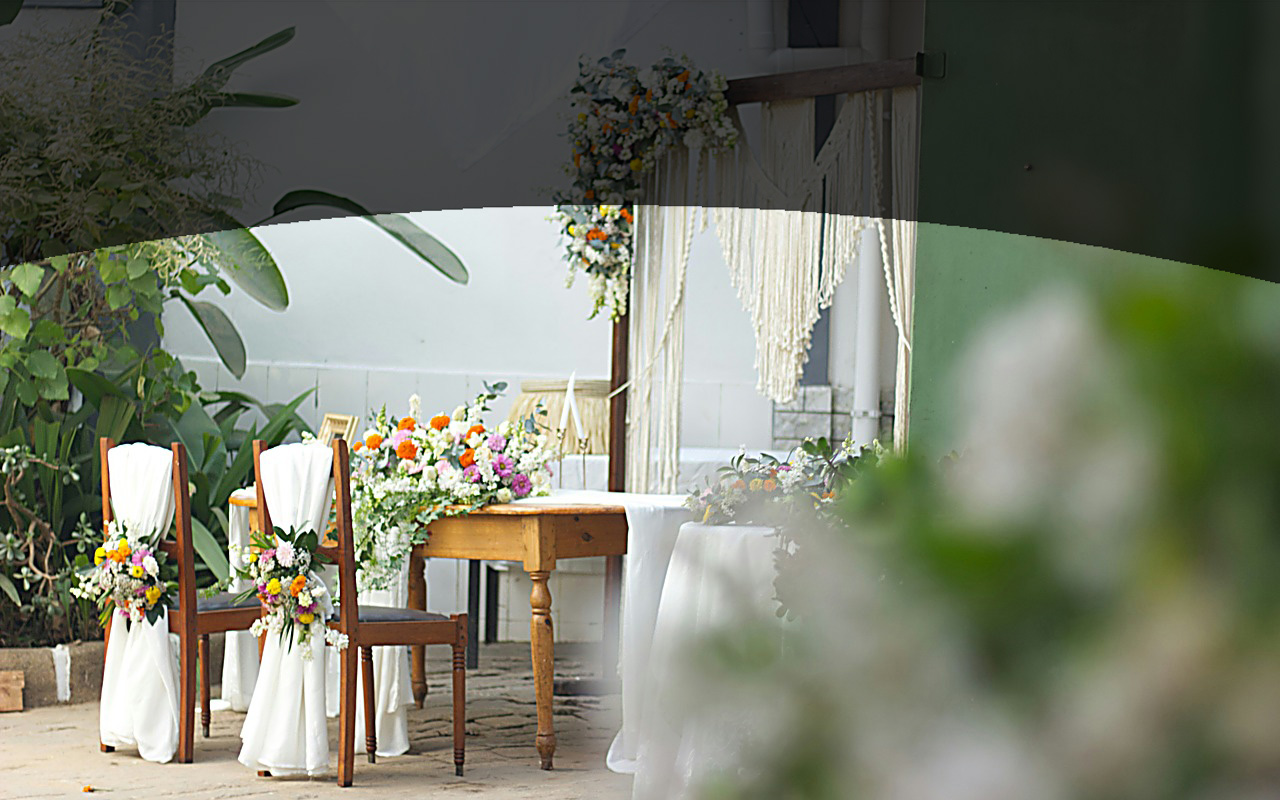
Tip #4 – Date & Venue – With Your Date & Headcount Set, Let’s Choose a Venue that Fits!
Tip #4 – The Date & Venue – With Your Date & Headcount Set, Let’s Choose a Venue that Fits!
Now that your budget is taking shape, it’s onto the fun part…let’s dive in!
So now what? Do we pick the venue first, or the date? Do we go with a Saturday in June because that’s “when weddings happen” or is there a smarter way to do this? Here’s the thing — your date and your venue are joined at the hip and one almost always has to come before the other. Get this pair right and everything that follows (vendors, save-the-dates, the whole Master Timeline) becomes more clear. Get it wrong and you spend the next year adjusting around a space or a day that never quite fit.
Start with a Date Range, Not a Single Locked-In Day
Are you flexible on the season? Would a Friday or a Sunday work instead of a Saturday? Off-season and weekday weddings can open up venues you thought were out of reach — and often at a fraction of the price. Popular Saturday nights in peak season book 12–18 months out in many markets. A Friday evening or Sunday afternoon in the same venue can be dramatically less expensive and still feel special.
Think about your guests too. If a large number are traveling, a long weekend or a date that avoids major holidays and local events makes life easier for everyone. Your guest list already told you how many people are coming and where they’re coming from — use that information now.
What to Consider Before You Start Touring Venues
1. Capacity vs. Your Guest Count
Don’t fall in love with a space that’s too small (or so big your 80 guests feel lost in it). A room that looks perfect empty can feel completely different once tables, a dance floor and a buffet are in place. Ask the venue for their recommended capacity for a seated dinner with a dance floor, not just the maximum number the fire code allows. Then compare that number to the realistic headcount from Tip #2 – The Guest List.
2. In-House Catering Requirements
Some venues make you use their kitchen and staff. Others hand you an empty room and a set of rules. Neither is automatically better — but you need to know which one you’re walking into before you book. An exclusive-caterer venue can simplify logistics; an open venue gives you more menu freedom but means more coordination on your side. Ask early so the decision doesn’t surprise your budget later.
3. What’s Included vs. What’s Extra
Tables, chairs, linens, parking, setup and teardown time, basic lighting, a bridal suite, security — ask for all of it in writing. I’ve seen couples fall in love with a space only to discover that “everything extra” added 20–30 % to the quoted price. Get a clear list of what is included in the rental fee and what is charged separately. Put it side-by-side with your Budget Breakdown before you sign anything.
4. Book Early
Popular venues go fast, sometimes 9–18 months out. I’ve walked into rooms the week of an event that were already booked solid more than a year in advance — don’t let that be you. Once you have a realistic date range and a solid headcount, start touring. If you find a space you love, put a hold on it while you finish comparing options. Most venues will give you a short courtesy hold if you ask.
5. Preferred Vendor Lists
This ties right back into your budget. A venue’s restrictions on catering, florals or rentals can shift your numbers fast. Some preferred-vendor lists are helpful (they already know the space and the rules). Others simply add a markup. Ask how the list works, whether you can bring in outside vendors with a fee and how that fee is calculated. Then update the numbers in Tip #3 – The Budget Breakdown, so you’re comparing apples to apples.
Questions Worth Asking on Every Venue Tour
A good venue tour should leave you with clarity, not more questions. If you walk out more confused than when you walked in, that’s not the venue for you. Here is a short list I recommend every couple take with them:
- What is the maximum seated capacity with a dance floor and buffet/stations?
- What is included in the rental fee (tables, chairs, linens, basic lighting, parking, staff)?
- Are there preferred or exclusive vendors? What are the fees if we bring our own?
- How much time do we get for setup and teardown? Is overtime available and at what rate?
- Are there any noise, alcohol or curfew restrictions?
- What happens if the weather is bad (for outdoor or partially outdoor spaces)?
- Can we see the space set up for an event of roughly our size?
- Who will be our day-of contact from the venue?
Write the answers down. Comparing three venues is much easier when the information is in the same format.
How Date & Venue Fit into the Bigger Picture
Once the date and venue are locked, the rest of the planning sequence becomes straightforward. You can view Tip #7 – Invitations & Save-the-Date! page, book the major vendors who need the longest lead times and start filling in the Master Timeline with real locations and times. Everything downstream gets easier when these two decisions are solid.
If you’re planning a wedding, you’ll also find more context on the overall process on my Weddings page.
A Couple Last Thoughts
A good venue doesn’t just hold your guests — it supports the day you actually want to have. Walk the space the way your guests will experience it. Imagine the entrance, the flow from ceremony to reception, the places people will naturally gather. If it feels right and the numbers work, you’ve found a strong foundation.
A venue tour should leave you with clarity, not more questions. If you walk out more confused than when you walked in, that’s not the venue for you.
For more specific details on this topic and so many more topics related to Catering, Event Planning or Wedding Organizing, visit My YouTube Channel. I’ll share my 40+ years of successes and some close calls working as a high-level Catering Event Manager — all the best tips, suggestions and money-saving opportunities in one place.
Download Free & Premium Wedding & Event Planning Tools
Practical templates used for real weddings and events. Download and start using them today.
Click any image to Enlarge
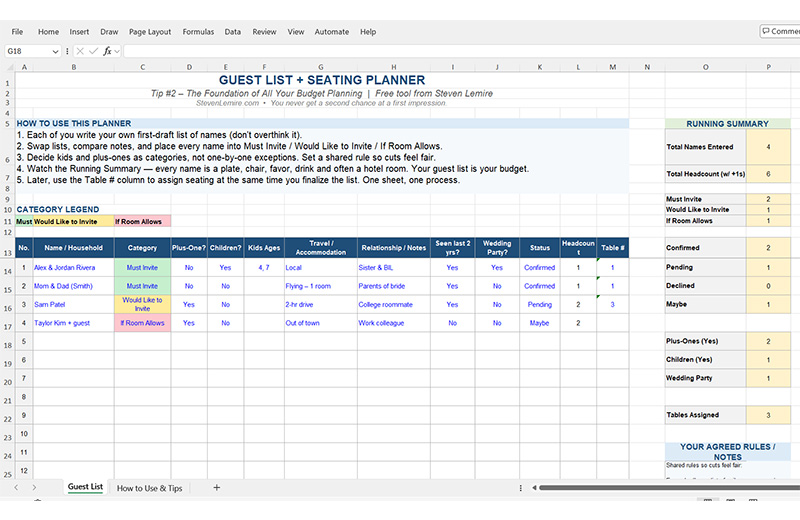
Guest List + Seating Planner
Organize Guests, Track RSVPs & Assign Tables in One Sheet.
FREE
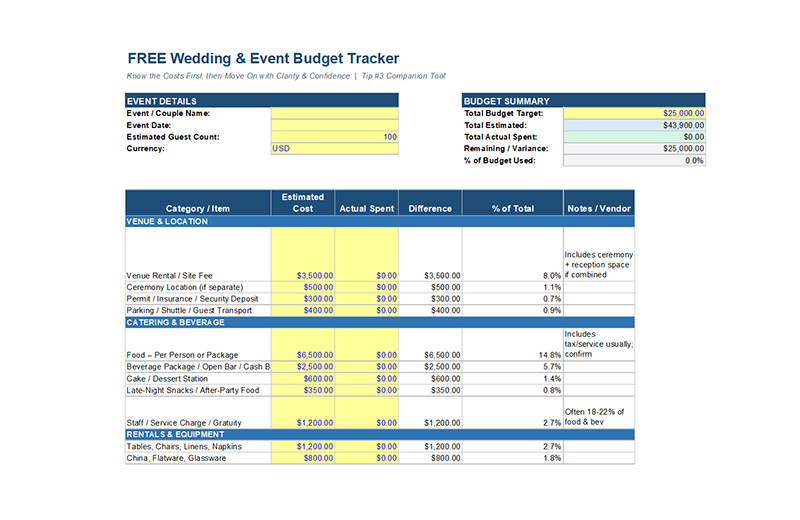
Wedding/Event Budget Tracker
Excel with Automatic Calculations or Printable Word Version
FREE
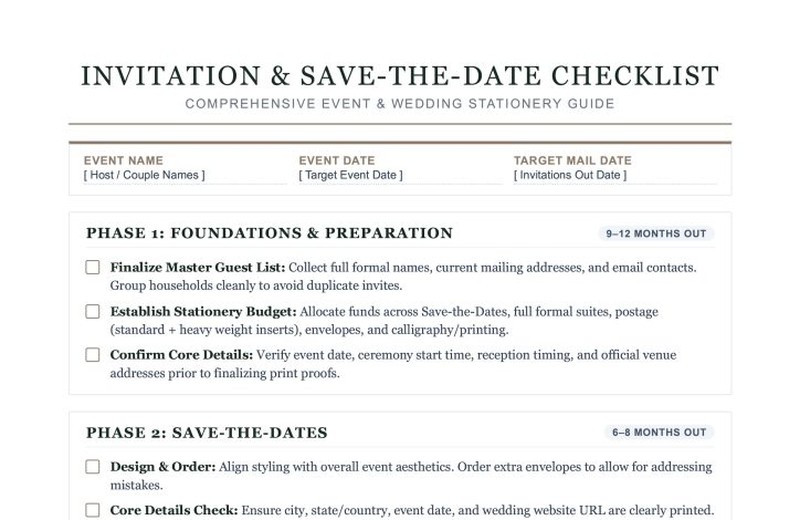
Invitation & RSVP Checklist
Printable Timing Guide Checklist to Keep Everything on Track.
FREE
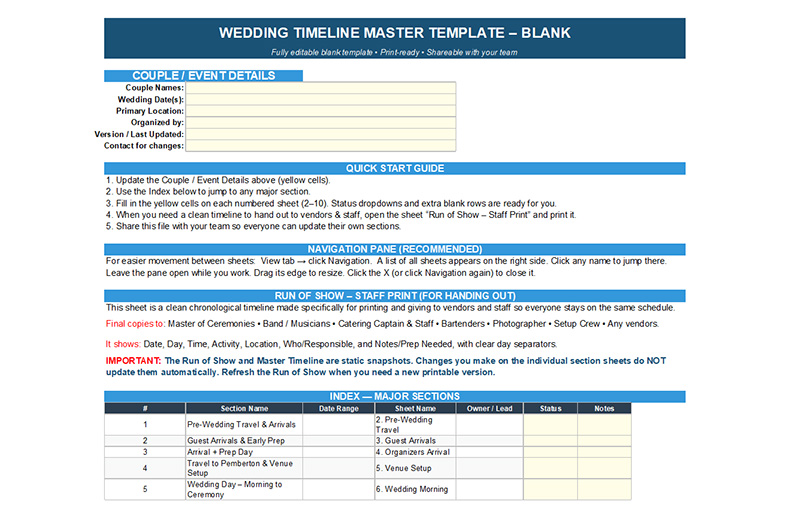
Event Master Timeline Template
13-Sheet Professional Excel System Used by Catering Teams & Planners.
$24 USD

Stay in touch
If you would like occasional updates on new event guides, upcoming art releases or notes from us in Mérida, please send us a message and we’ll add you to our Contact List.
In the meantime, Enjoy!
